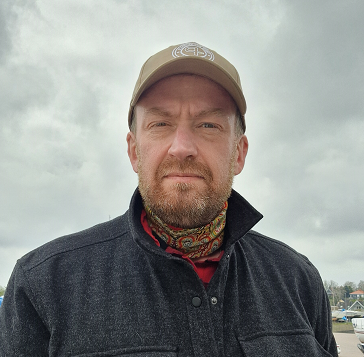
From Outcome-Addicted, to Process-Driven
I never set out to build a philosophy.
I set out to build consistency — discipline — mental resilience.
After years of chasing results, I slowly came to realize that the problem wasn’t my intelligence or ambition — it was the lack of structure to sustain it.
The Beginning
The moment I realized my biggest enemy wasn’t the market — it was me
Three and a half years ago, I made the decision to start trading the financial markets for a living.
At the time I had no idea that the decision would require a total overhaul of who I was as a person.
I noticed quite early that I made different decisions depending on who was watching, and how much money was at risk – when all that was required of me was to just follow my system.
I had developed a solid, simple and proven strategy with thousands of simulated trades to back it up, and I knew that statistically I would win 55-60% of the trades I placed on a risk to reward ratio of 1 to 3. An excellent system by any standard.
Yet the higher the stakes, the less I trusted it – and the more money I lost.
The hardest part was to truly accept the uncertainty – that wins and losses are never evenly distributed.
That the market is not an entity that you can predict; it is merely the collective result of millions of people’s fear, greed, emotions and herd mentality.
And the market doesn’t care how hard you work.
The market doesn’t reward effort. It rewards consistency, patience and discipline.
It rewards those who follow their plan, who wait like snipers, and who act only when their edge appears.
It’s like flipping a coin.
Even if you know that statistically you should get tails 50% of the time and heads 50% of the time you still start to doubt the coin when it lands on heads six times in a row.
You doubt the system – and you start searching for a new way to play the game, instead of simply waiting it out.
Logically I knew that nothing in the strategy changed with position size or external conditions.
What changed was me – my emotions – shaped by a subconscious attachment to money and outcome.
My self-worth plummeted every time I racked up five losses in a row.
And before the market structure changed again to give me some wins, I had already changed my system.
I was a high achiever – used to succeeding in most things I set out to do.
So naturally I wanted to feel good, to appear successful, to feed my ego with wins and shield it from losses.
Paradoxically, this very pursuit of good feelings and external validation becomes the ultimate destroyer of sustainable growth and consistent performance.
About two years in to my journey I came to understand that the market was never my opponent.
It was a mirror — reflecting my own internal values, beliefs, and attachments back at me.
Values I hadn’t even known I carried. Because they had never been exposed so brutally before.
And from that realization – that I was my own worst enemy – everything began to change…
The Realization
Success isn’t about avoiding losses — it’s about becoming the kind of person who can handle them
I began to connect my reactions to wins and losses in the market with how I had dealt with success and failure earlier in life — both professionally and personally.
I realized I had a pattern: I attributed success to my own brilliance, but failure to the flaws of others.
Bad colleagues. Broken systems. Failing healthcare. Corrupt politicians. Inefficient institutions. Faulty society.
My first real step forward was to take full responsibility for my own situation.
Because in the end, all of the above falls back on the individual — the collective is nothing more than the sum of its individuals.
I had received exactly what I deserved — but never what I truly wanted.
Because in truth, I had never acted like a man who truly wanted what he dreamed of.
And that’s why I never got it.
My entire life had, in one way or another, been a long pattern of self-sabotage against sustainable success.
From an early age, we are taught that wins are good and losses are bad.
Accidental wins are celebrated, while process-based losses are criticized.
We feel proud when we win and ashamed when we lose — even when the losses are a natural, necessary part of the process and of life itself, and when wins are often a product of coincidence or pure luck.
Our relationship with winning and losing — with success and failure — is deeply embedded in the human psyche. Thousands of years ago, victory meant that you were an asset to the clan — maybe even become its leader.
Losing meant weakness and weakness meant liability, a potential threat to the clan’s survival.
So unconsciously, winning still means survival — and losing means death.
BUT:
In the modern world, that inherited survival instinct rarely serves us.
In fact, it often works against us.
Its destructive side stays hidden until we push ourselves to the absolute limit.
And because the consequences of our behavior rarely appear immediately — especially in the modern work place — we fail to notice it.
You don’t get fired for being ten minutes late.
You don’t lose your paycheck for doing a slightly worse job one day.
Most people hide behind the illusion that “no one will notice anyway” — and then move on.
And in that way, many go through an entire life without ever realizing what’s going on behind the scenes —
how they quietly sabotage both themselves and the very system they depend on.
But high-frequency trading – day trading – and other high-performance mental disciplines expose those flaws.
In these arenas, it’s no longer about winning to survive, but surviving to keep playing.
A game where steady progress and consistent execution beat intensity and bursts of motivation every single time.
And that goes directly against human nature — we’re not built for the long game. We’re built for instant reward.
With that in mind, one might even argue that wins mean very little if the path toward them wasn’t planned, structured and intentional.
Losses, on the other hand, aren’t failures by definition — they’re simply the price we sometimes have to pay to play the game.
Or simply to live.
The real key to sustainable results is consistency — keeping losses smaller than wins.
Two steps forward, one step back.
The goal isn’t to avoid losses — that’s impossible.
The goal is to build the mental resilience required to handle yourself through losses and difficult times — instead of structuring your entire life around avoiding them.
Our obsession with instant gratification is another one of humanity’s greatest enemies — especially when it comes to building anything capable of enduring storms and standing the test of time.
“Understanding the problem wasn’t enough — I had to rebuild the man facing it.”
The Overhaul
When nothing works — rebuild the machine
After realizing that I was my own worst enemy, I understood that if this was ever going to work, I had to turn myself completely inside out. To dissect the deepest patterns of my mind, question my identity, my self-image — and in practice, silence parts of what makes us human.
I had to face demons I had buried years ago — drag them into the light, expose them, confront them, and either tame or kill them for good.
It was the darkest and most painful period of my life.
So many wounds. So many hidden scars. So many false beliefs and misconceptions.
The bright future I had imagined as a trader fell to pieces.
I was severely overweight, lacked structure, filled with destructive habits — and yet I tried to master one of the most demanding professions in the world:
To consistently extract money from the financial markets — the graveyard of many, and the gold mine of a few.
If you start trading, there’s a 95% chance you won’t be around three years later.
Most people can’t change themselves fast or deeply enough before their money runs out.
Others simply won’t, because they can’t handle having their values and ego challenged on such a deep level.
They give up — blaming the market, calling it a scam — instead of admitting their own failure to conquer themselves.
So, to compete with some of the sharpest and most disciplined minds on the planet, and to become part of the small percentage that actually make it, I began building an elite-level structure around every single part of my life.
I built it like an athlete in training:
2,5 hours of daily exercise, a minimalist and nutrient-dense diet, 12–14 hour workdays, elimination of all emotional dependencies, and a near-obsessive deep dive into philosophy, psychology, and trading literature.
My guiding principle was — and still is:
Never justify failure by saying you tried your best. Do what’s required to succeed.
After a year, I had lost 68 kilos and was operating at an elite level of discipline.
And with that, my falling equity curve finally began to flatten out.
It’s strange. When you focus on what you think you need to improve — in my case, the technical aspects of trading — nothing seems to work.
You expect quick results, and when they start to show, you self-sabotage your way back to zero.
It’s the same in every area of life: weight loss, training, learning, building new habits, saving money — it all follows the same pattern.
But when you shift your focus to the bigger picture — to becoming the person you need to be in order to earn and sustain what you desire — that’s when real progress starts to appear.
It comes quietly — like a ghost in the shadows — so slowly that you don’t even notice it until you’re already there.
And then, looking back, you realize how far you’ve come — and how blind you once were.
You’ve built a new reality without even noticing it happen
“Discipline built the structure. Depth gave it soul.”
The Deeper Work
You can never outperform the parts of yourself you refuse to face
Since the beginning of this journey, I’ve spent thousands of hours dissecting my own mind — and human psychology at large.
My primary sources have been my own daily journals from the past three years, deep dives into Stoic philosophy (Marcus Aurelius, Seneca), and extensive studies of Carl Jung’s work on personality and the shadow self.
That work has completely reshaped my identity and my self-perception — as well as the way I understand human behavior in general.
It was like pulling up a blindfold — and suddenly seeing the connections everywhere.
I’ve pulled myself up from an abyss — a life-threatening state that I, at the time, didn’t even realize might have been close to the end.
My body was shutting down, and I had no structure, no order, no clarity.
Severe obesity. Bankruptcy. Debt. Destructive habits.
To disciplined, structured, and fully alive — as a father, husband, entrepreneur, coach, and trader.
That work didn’t just change how I thought — it changed who I was.
It stripped away the illusion that growth comes from more knowledge, more systems, more answers.
True growth came from facing what I’d avoided, standing firm when the storm raged, and seeing myself without filters.
Only then did everything begin to fall into place.
Not through force — but through clarity.
Not through speed — but through depth.
Discipline built the structure. Depth gave it soul…
The Origin of The Locomotive Mindset™
The moment everything fell into place — I was no longer the trader watching the charts. I was the locomotive pulling the wagons
It hit me one morning, out of nowhere, while I was making the bed.
I was thinking about trading — about how emotions, expectations and ego distort our decision-making.
And then I realized — it’s the same pattern everywhere. At work. In relationships. In life.
What if I could trade on a platform that showed no information about my accounts at all?
No PnL. No balance. No drawdown.
What if I didn’t even know which account I was trading, how much was at stake — or whether I was trading a real account in the first place?
Imagine a function where I could connect my accounts as hidden extensions of the platform.
The accounts would be the wagons — and the platform itself, the locomotive.
If I couldn’t see the wagons — or even know they existed — my focus would be entirely on the engine.
On the mechanics.
On the process.
The system would still move forward.
The result would still be there.
But I would be emotionally detached from them — no valuation, no judgment, no noise.
And that’s when it clicked.
I was never meant to be the trader obsessing over charts, chasing patterns that only existed in my head.
And I was never meant to be the person seeking validation to justify my actions or prove my worth.
My only job was to be the locomotive — and let everything else become the wagons.
My strategy was the rails.
My body and my mind were the foundation that kept those rails firmly grounded.
When I thought about it more deeply, I realized this was the mindset I had been trying to live by all along —
I just hadn’t found the words for it.
Both in trading — and in life.
Follow the plan — not the feeling.
And in that moment, The Locomotive Mindset™ was born.
The Invitation
My intention in sharing this model is simple:
To help others become their best selves.
As human beings, we are gifted with far more capacity than we usually admit or utilize – yet we’re often our own worst enemies when it comes to achieving what we desire the most.
Now is the time to step up – to use what you already have within you.
So finally, I hope to meet you in a course or a keynote.
And I sincerely hope my experience and hard-won knowledge of self-care and personal development will serve you on your path to becoming the best version of yourself.
THIS ISN’T MOTIVATION – IT IS A CAREFULLY ENGINEERED MAINTENANCE PROGRAM